Building a Service-Based Sales System: Listening & Suitability
Author: Feras Alayed
Published:
Category: business-opportunity
Reading Time: 8 minutes
- Service-based sales prioritize long-term client suitability over immediate transactional gains.
- Active listening is the foundational skill for identifying genuine needs and building trust.
- Ethical qualification involves the willingness to redirect a prospect if the solution is not a fit.
- A structured 30/60/90-day learning path is essential for mastering service-oriented leadership.
- Sustainable business growth relies on education-first interactions rather than high-pressure persuasion.
Introduction: The Shift from Persuasion to Service
In the modern business landscape, the traditional image of the high-pressure salesperson is rapidly becoming obsolete. Today, the most successful and sustainable models are built on a service-based sales system. But what does it mean to serve rather than just sell? It begins with a fundamental question: Is this solution truly suitable for the individual's specific needs, or is the goal simply to meet a quota? This article explores the mechanics of building a sales framework that prioritizes active listening, ethical suitability, and professional service.
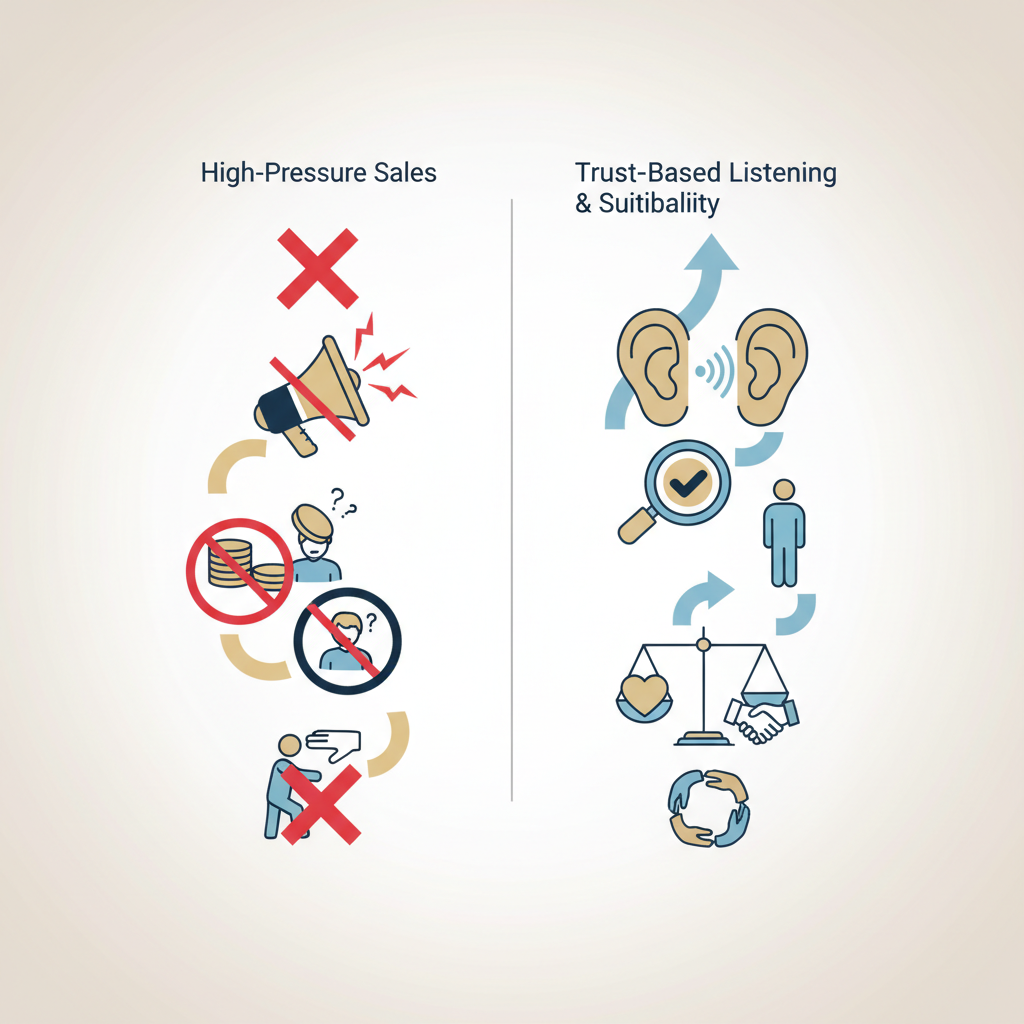
The Philosophy of a Service-Based Sales System
A service-based sales system is rooted in the belief that business success is a byproduct of providing genuine value. Unlike transactional models that focus on the 'close,' a service-oriented approach focuses on the 'opening'—opening a relationship, opening a dialogue, and opening a path to a solution. This requires a shift in mindset from being a 'vendor' to becoming a 'trusted advisor.' The primary goal is not to convince, but to consult. This philosophy aligns with the principles of effective health literacy, where the goal is to empower individuals with clear, actionable information so they can make informed decisions for their own wellbeing, as discussed in our Effective Health Literacy Guide.
The Role of Active Listening
Active listening is more than just hearing words; it is the practice of fully concentrating, understanding, responding, and then remembering what is being said. In a service-based system, listening serves three critical functions: it builds rapport, it uncovers the 'why' behind a prospect's inquiry, and it identifies potential barriers to success. When a professional listens more than they speak, they demonstrate respect and professional maturity. This is a skill that requires practice and intentionality, much like the cognitive focus needed to navigate complex information in regions like Al-Ahsa.
Assessing Suitability: The Ethical Filter
One of the most challenging aspects of a service-based sales system is the concept of suitability. Suitability means that the product or partnership offered is appropriate for the client's current situation, goals, and resources. An ethical professional must be prepared to say 'no' if the fit isn't right. This 'qualification' process is not about judging the prospect, but about protecting both parties from a failed engagement. By ensuring suitability, you reduce future friction and build a reputation for integrity. This process is similar to how one might evaluate complex longevity claims by looking for evidence-based patterns rather than quick fixes, a topic explored in our analysis of Blue Zones eating patterns.
Comparison: Transactional vs. Service-Based Models
| Feature | Transactional Sales | Service-Based Sales |
|---|---|---|
| Primary Goal | Closing the deal | Solving the problem |
| Communication Style | Persuasive / Pitch-heavy | Inquisitive / Listening-heavy |
| Client Relationship | Short-term / One-off | Long-term / Partnership |
| Success Metric | Volume of sales | Suitability and retention |
| Handling Objections | Overcoming them | Exploring the underlying concern |
Designing the System: A Step-by-Step Framework
Building a service-based system requires a structured approach to every interaction. It is not about following a script, but about following a process that ensures the client feels heard and supported.
1. The Discovery Phase
The discovery phase is the most important part of the service-based system. Instead of leading with a presentation, lead with questions. Ask about their current challenges, their long-term objectives, and what they have tried in the past. This phase is about gathering data to determine if your solution can provide a meaningful impact.
2. The Education Phase
Once you understand the needs, your role shifts to educator. Provide information that helps the client understand their options. This might include explaining how to read complex labels or guidance, similar to the clarity provided in the Saudi food label guide. The goal is to make the client 'literate' in the solution you are proposing.
3. The Suitability Check
Before moving toward a commitment, perform a suitability check. Summarize what you have learned and ask the client: 'Based on our conversation, does this approach align with what you are looking for?' This gives the client the space to reflect and ensures that any decision made is autonomous and informed.
Leadership and Team Culture
For a service-based system to thrive, leadership must reinforce these values. If a team is only incentivized on volume, they will naturally drift toward transactional behaviors. Leaders should reward thorough discovery, high retention rates, and ethical decision-making. Creating a culture of service also involves supporting the wellbeing of the team, ensuring they have a sustainable workday that prevents burnout and maintains high standards of customer care.
The 30/60/90-Day Learning Journey
Mastering a service-based sales system does not happen overnight. It requires a structured learning path to develop the necessary skills and mindset.
- Day 1-30: The Foundation. Focus on learning the core values of the organization, the technical details of the service, and the art of the discovery question. Observe experienced mentors and practice active listening in every interaction.
- Day 31-60: Application and Feedback. Start leading discovery sessions under supervision. Focus on identifying suitability rather than 'making the sale.' Review interactions to see where listening could have been deeper.
- Day 61-90: Mastery and Leadership. Begin to handle more complex scenarios independently. Start mentoring others in the service-based approach. Focus on building long-term relationship structures and refining the education phase of the process.
How This Connects to the Partnership Path
The ATHAR partnership path is designed for individuals who value service, ethical leadership, and professional growth. This is not a path for those seeking quick results or high-pressure environments. Instead, it is a journey of qualification and skills discovery. We look for partners who are committed to learning how to serve their communities through education and support. The process involves understanding the member journey and ensuring that every person who engages with the system is treated with respect and clarity. If you are interested in a professional path that prioritizes suitability and service, we invite you to explore whether this alignment suits your goals.
People Also Ask
What is the difference between selling and serving?
Selling often focuses on the needs of the seller (meeting a quota), while serving focuses entirely on the needs of the buyer (solving a problem). Serving involves a commitment to the client's long-term success, even if it means not making a sale today.
How can I improve my active listening skills?
Practice the 'wait' rule: Why Am I Talking? Before speaking, ensure the other person has finished their thought. Use clarifying questions like 'What I hear you saying is... is that correct?' to ensure alignment.
Why is suitability more important than closing?
A closed deal with a poor fit leads to dissatisfaction, high churn, and a damaged reputation. A focus on suitability ensures that every client is a success story, which leads to organic growth and professional fulfillment.
Can a service-based system be as productive as a traditional one?
Yes, and often more so in the long run. While transactional models may see quick spikes, service-based models build a foundation of trust and referrals that create sustainable, long-term growth without the constant need for high-pressure tactics.

How do I handle a prospect who is not a good fit?
Be honest and professional. Explain why the current solution might not meet their specific needs and, if possible, redirect them to a resource or service that is better suited for them. This builds immense trust and integrity.
FAQ
What are the core components of a service-based sales system?
The core components include active listening, thorough discovery, client education, suitability assessment, and ongoing relationship support.
How does health literacy impact service-based business?
Health literacy, as discussed in guides for Canada and other regions, is about providing clear information. In business, this means ensuring the client fully understands the service and its implications before committing.
Is this approach suitable for all industries?
While particularly effective in professional services, health, and education, the principles of listening and suitability can improve customer satisfaction in almost any industry that values long-term client relationships.
What should I expect in the first 90 days of learning this system?
Expect a heavy focus on skill-building, mindset shifts, and understanding the ethical boundaries of the service. It is a period of intense learning and professional development.
How do I start exploring the partnership path?
The primary next step is to engage in a suitability exploration to see if your values and goals align with the service-based mission of the partnership. This is a discovery process, not a commitment.
Disclaimer: The information provided here is for educational purposes regarding business systems and leadership. Financial outcomes in any partnership depend on individual effort, skills, consistency, market conditions, and specific programme policies. All partnership paths require independent verification of eligibility and policies. This content does not constitute health advice or medical claims; for health-related concerns, please consult a qualified professional. Understanding the hallmarks of aging or other health topics should be done through verified scientific sources.
Further Education
- Explore the metabolic health education hub
- Learn how to read research summaries
- Use the educational health assessment
Evaluate the path with clarity
Use the decision guide to review eligibility, responsibilities, policies, and questions that require confirmation from official programme sources. No financial outcome is promised.